

In this guide
Ceremony audio helps your guests hear the vows, readings, and officiant. It deserves the same planning as the music and seating.
The aim is clear speech at a comfortable volume. Feedback or uneven coverage can leave guests struggling to hear.
As a wedding DJ based in Bozeman, I plan ceremony audio around the venue, seating, and outdoor conditions.
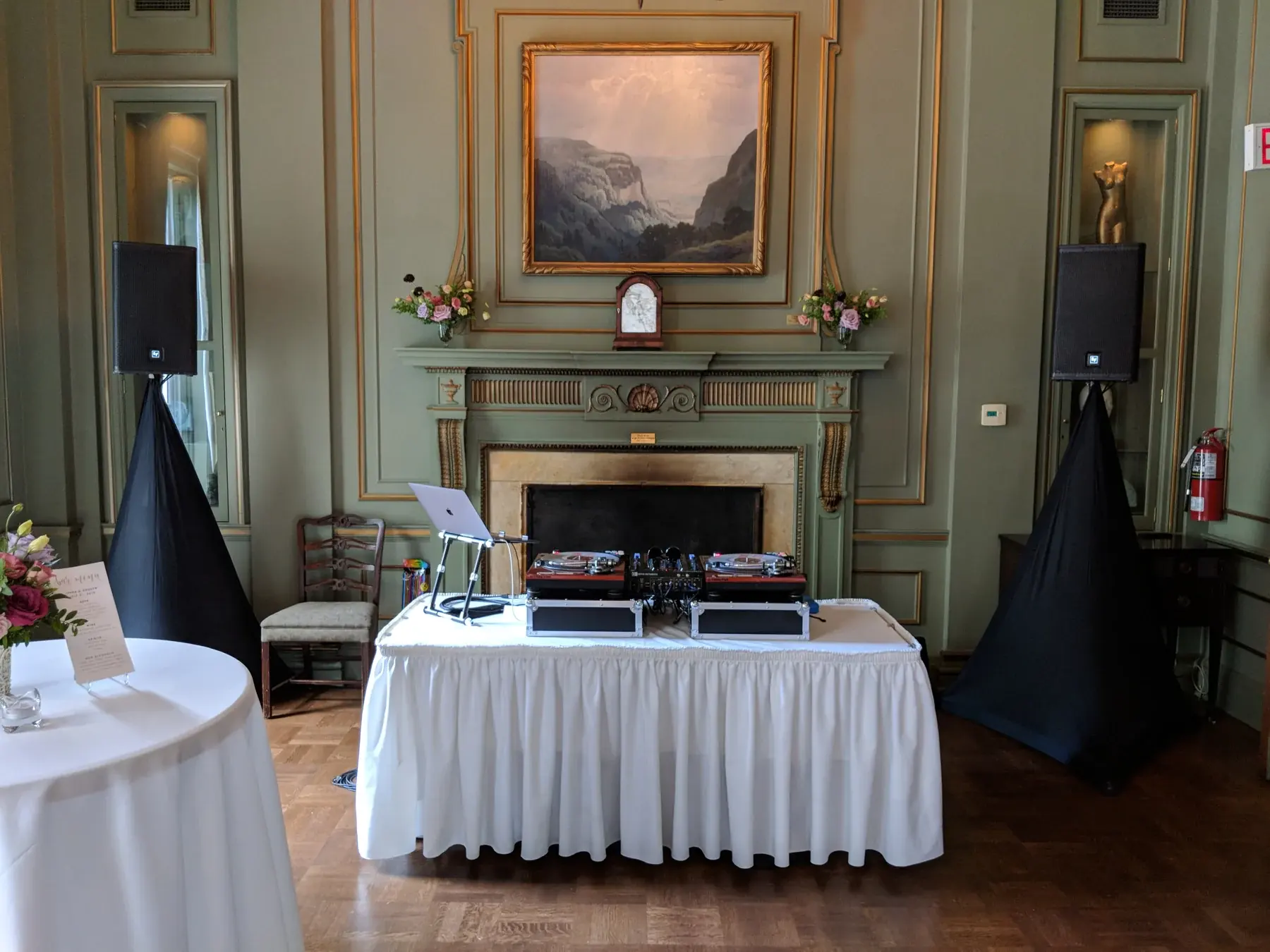
A reception setup example. Ceremony audio needs its own placement plan for microphones and speakers.
Ceremony Audio: Plan Clear Vows and Music
The ceremony needs a sound plan of its own.
There are no second takes for:
-
Vows
-
Readings
-
Pronouncements
If guests can’t hear, they can miss parts of the ceremony. Plan ceremony audio specifically for spoken word, with time for setup and testing.
Outdoor Ceremonies Add Complexity
Outdoor weddings are beautiful, but they introduce challenges that don’t exist indoors.
Common outdoor ceremony audio issues include:
-
Wind noise affecting microphones
-
Sound dispersing into open space
-
Guests seated far from the ceremony area
-
Uneven ground affecting speaker placement
Because Montana weddings frequently take place outdoors, ceremony audio needs to be designed for these conditions from the start. Compare indoor and outdoor wedding audio when planning your setting.
Microphone Choice and Placement Matter
Not all microphones work the same way.
For ceremonies, the goal is:
-
Natural-sounding voices
-
Minimal visual distraction
-
Consistent volume
Professional ceremony audio often includes:
-
A microphone for the officiant
-
A discreet solution for the couple
-
Proper gain settings to avoid feedback
This ensures everyone hears what matters — without microphones becoming the focus.
Speaker Coverage Depends on Your Seating Layout
A common assumption is that a single speaker near the ceremony will cover the space. In reality, this often leads to uneven sound where guests in the front hear clearly and guests in the back struggle.
Good ceremony audio considers:
-
Guest seating layout
-
Distance and spacing
-
Direction of sound coverage
The goal is even, comfortable sound for all guests, not just the first few rows.
Ceremony Audio Should Be Separate From Reception Audio
Ceremony audio has very different needs than reception sound.
Trying to reuse the same equipment often causes:
-
Rushed transitions
-
Delays between events
-
Incomplete sound checks
Dedicated ceremony audio allows everything to be set, tested, and ready before guests arrive — which keeps the day calm and on schedule.
Quiet Moments Are the Hardest to Get Right
The softest moments are often the most emotional:
-
Personal vows
-
Readings
-
Pauses during the ceremony
Test for hum, feedback, and sudden volume changes before the ceremony. These problems are more noticeable during quiet speech and pauses.
Final Thoughts
Your ceremony is the heart of your wedding day. Guests should be able to hear every word clearly, without thinking about microphones, speakers, or technical details at all. That clarity is an important part of wedding sound quality.
Plan and test the ceremony audio before guests arrive so you can focus on the ceremony.
If you’re planning a wedding in Bozeman or Southwest Montana, tell me about the ceremony location and seating. I can help you work through the ceremony audio plan.
For a closer look at microphones and recorded speech, Shure’s audio systems guide includes wedding microphone and outdoor wind-protection considerations. Use it to inform the questions you discuss with your audio provider.
Learn more about weddings